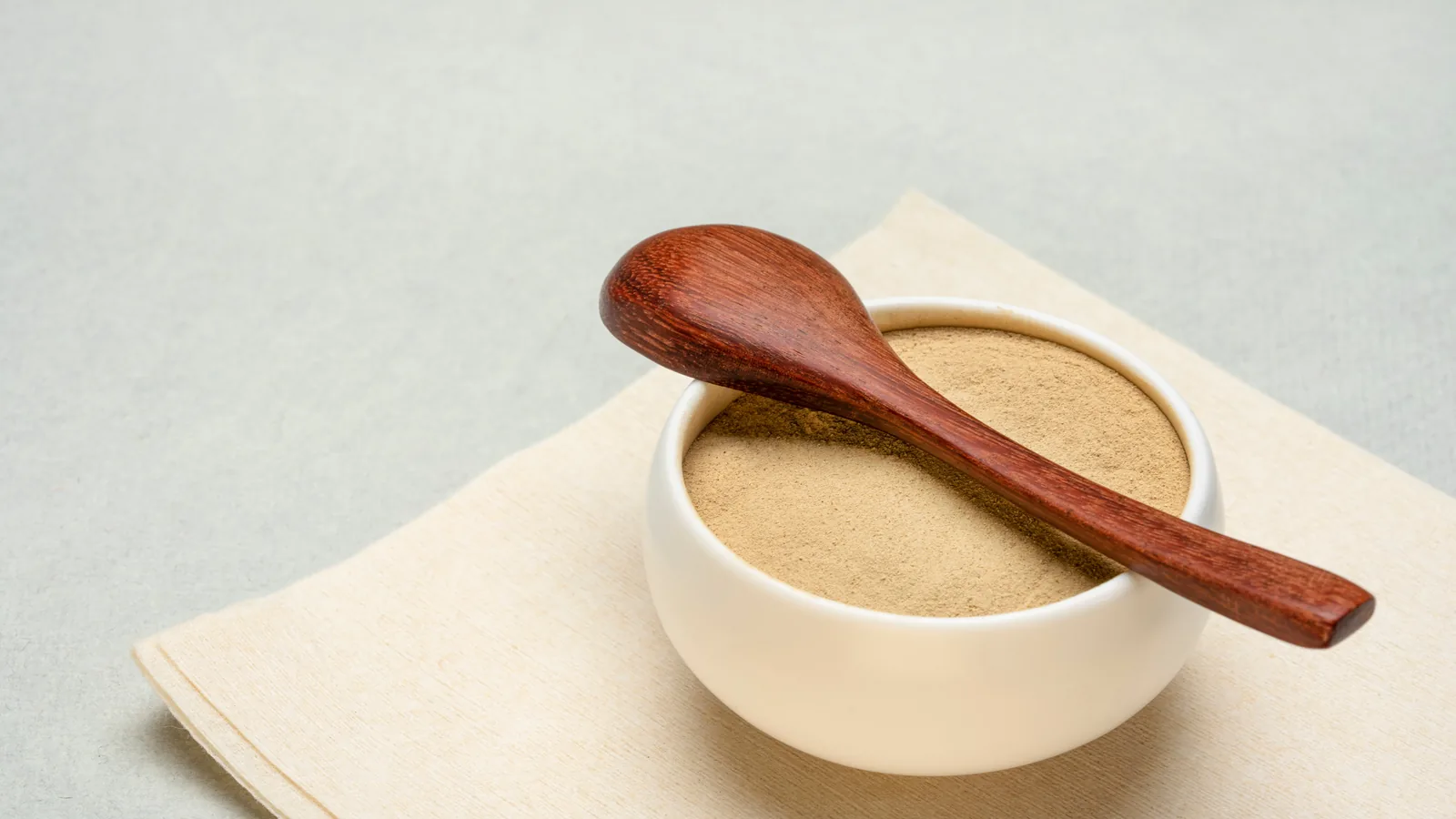
Ashwagandha has gone from Ayurvedic staple to TikTok obsession in about three years. The claim driving it: it lowers cortisol, the stress hormone that, when chronically elevated, disrupts sleep, drives belly-fat storage, and suppresses everything from immunity to testosterone.
Big claim. So we did what we always do: ignored the influencers and read the human trials.
The evidence that holds up
The most cited study is a 2012 randomized, double-blind, placebo-controlled trial in 64 chronically stressed adults: 300mg of a standardized root extract twice daily for 60 days cut serum cortisol by roughly 28% versus baseline, alongside significant drops in perceived-stress scores.1
It's not a one-off. A 2019 trial in overweight men aged 40-70 found meaningful improvements in DHEA-S and testosterone alongside reduced fatigue,2 and another 2019 study found dose-dependent cortisol reductions at 250mg and 600mg per day.3 A 2022 systematic review and meta-analysis pooling the available RCTs concluded that ashwagandha supplementation significantly reduced both cortisol and anxiety scores.4
By supplement-industry standards, that's an unusually consistent body of evidence.
The caveats nobody puts on the box
- The trials are small. Most enroll 50-130 people for 8-12 weeks. Consistent, but not statin-sized evidence.
- Industry funding is common. Several key trials were funded by extract manufacturers. That doesn't invalidate them, but it's the pattern we flag in every category.
- Standardization is everything. The studied extracts are standardized to withanolides (typically 5% for root extracts). Generic “ashwagandha powder” with no withanolide percentage on the label is a different product than what was tested.
- Effects show up in stressed people. If your cortisol is normal, expect less. Adaptogens regulate; they don't ablate.
What dose the studies actually used
The effective range across trials is 240-600mg per day of standardized root extract, usually split morning and evening, for at least 8 weeks. Two label patterns should make you skeptical: “proprietary calm blend” with no ashwagandha dose visible, and 50mg sprinkles in products whose front label shouts about stress relief. Neither resembles anything that's ever been studied, a pattern we covered in detail in our guide to supplement label tricks.
Bottom line
Ashwagandha is one of the rare trending ingredients where the human data broadly backs the headline claim: standardized root extract, at studied doses, reliably lowers cortisol in stressed adults. The gap between the science and the shelf is, as usual, dose and standardization. Check for withanolide percentage, check the milligrams, and give it eight weeks before judging.
Why does cortisol matter so much for men specifically? Because cortisol is testosterone's biochemical opponent: when one stays high, the other stays low. It's one of the main reasons average testosterone keeps falling, which we unpack in why men's testosterone is lower than ever. If you're weighing an ashwagandha-containing product, our lab-tested ranking of the top 5 testosterone boosters shows which ones actually use a standardized dose.
4 sources
- Chandrasekhar K, et al. A prospective, randomized double-blind, placebo-controlled study of safety and efficacy of a high-concentration full-spectrum extract of ashwagandha root in reducing stress and anxiety in adults. Indian J Psychol Med. 2012.
- Lopresti AL, et al. A randomized, double-blind, placebo-controlled, crossover study examining the hormonal and vitality effects of ashwagandha in aging, overweight males. Am J Mens Health. 2019.
- Salve J, et al. Adaptogenic and anxiolytic effects of ashwagandha root extract in healthy adults: a double-blind, randomized, placebo-controlled clinical study. Cureus. 2019.
- Akhgarjand C, et al. Does ashwagandha supplementation have a beneficial effect on the management of anxiety and stress? A systematic review and meta-analysis of randomized controlled trials. Phytother Res. 2022.